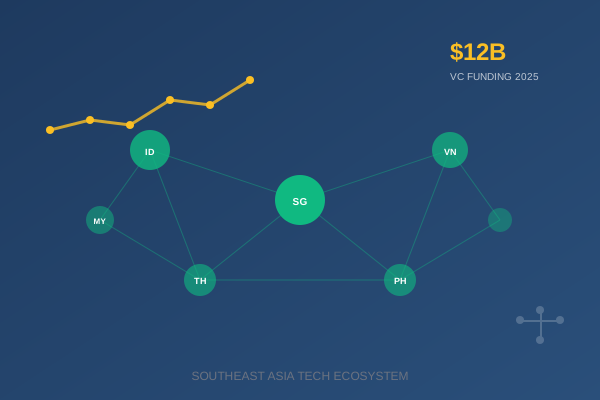
Southeast Asia's technology ecosystem has evolved from a nascent market dominated by copycat models to a sophisticated landscape with homegrown champions, differentiated business models, and increasingly attractive investment opportunities. For investors looking beyond traditional markets, the region merits serious attention.
Market Maturation
The SEA tech ecosystem has reached a new level of maturity. First-generation winners have established dominant positions in ride-hailing, e-commerce, and digital payments. More importantly, a second wave of companies is emerging across B2B software, fintech infrastructure, and vertical-specific platforms.
This maturation brings both opportunity and challenge. The opportunity: more investable companies with proven business models and clearer paths to profitability. The challenge: valuations have adjusted to reflect this maturity, and finding mispriced assets requires deeper analysis. For an example of how disciplined portfolio management drives results in SEA, see our VC portfolio turnaround case study.
Priority Sectors
Fintech Infrastructure: While consumer fintech has received attention, the infrastructure layer—payment rails, lending platforms, banking-as-a-service—offers compelling opportunities. Financial inclusion remains a massive tailwind, and B2B models often provide more defensible economics.
Enterprise Software: SEA's enterprise software market is underpenetrated relative to developed markets. As companies professionalize and regional champions scale, demand for productivity, collaboration, and vertical software is accelerating.
Healthcare Technology: COVID accelerated healthcare digitization across the region. Telemedicine, digital pharmacies, and health insurance technology have established product-market fit and are now scaling.
Climate Tech: The region's exposure to climate risk and the presence of major agricultural and manufacturing industries create opportunities in carbon management, sustainable supply chains, and clean energy technology.
Country-Specific Dynamics
SEA is not monolithic—each market has distinct characteristics:
- Indonesia: The largest market with the greatest long-term potential, but complexity in execution and regulatory navigation
- Singapore: Regional headquarters and financial hub; strong ecosystem but limited domestic market
- Vietnam: Rapidly growing with strong technical talent; increasingly attractive for both domestic plays and regional expansion platforms
- Philippines: Large English-speaking market with particular strength in services and BPO-adjacent technology
- Thailand: Established consumer market with growing startup ecosystem; regulatory environment evolving
Investment Considerations
For investors evaluating SEA tech opportunities:
- Unit Economics Focus: The funding environment has shifted; investors now prioritize path to profitability over growth at all costs
- Regional vs. Local: Some businesses scale across SEA; others are inherently local. Understanding which is which is critical
- Currency and Exit: USD-denominated returns require attention to currency exposure and exit path realism
- Talent Competition: Competition for technical and management talent is intense; team assessment is paramount
GCC-SEA Connections
We see increasing connectivity between GCC and SEA investment ecosystems. GCC-based investors are attracted to SEA's growth dynamics and technology ecosystem depth. SEA companies are eyeing the GCC as an expansion market given cultural familiarity, growing digital adoption, and available capital.
For investors and companies operating across both regions, this connectivity creates opportunities for arbitrage, partnership, and knowledge transfer. Our fund and portfolio advisory work increasingly spans both ecosystems.
Exploring Southeast Asia Investment?
Blue Ridge Advisory helps investors navigate the SEA technology landscape with local networks and regional perspective.
Get In Touch