Series B represents a critical inflection point for startup governance. The informal structures that worked when you were a small team making quick decisions often break down as you scale. Building proper governance foundations now will serve you through Series C, potential M&A discussions, and beyond.
Why Governance Matters at Series B
At Series A, your board likely consisted of yourself, perhaps a co-founder, and one or two investors who took a relatively hands-off approach. Decisions were fast, communication was informal, and governance was whatever fit on a napkin.
Series B changes the equation. You're likely adding new board members, managing more complex stakeholder relationships, and making decisions with larger financial implications. The investors at this stage—often growth equity funds—have higher expectations for process and documentation.
More importantly, proper governance protects you. Clear structures, documented decisions, and defined responsibilities reduce personal liability, manage conflicts of interest, and create the foundation for institutional credibility.
Board Composition and Structure
The ideal Series B board balances founder control with investor representation and independent perspective. A common structure includes:
- Founder seats (1-2): Typically the CEO and sometimes a co-founder
- Investor seats (2-3): Representatives from lead investors across rounds
- Independent directors (1-2): Experienced executives who bring outside perspective
The independent directors are often undervalued at this stage. A well-chosen independent can provide mentorship, industry connections, and a neutral voice when founder-investor tensions arise. Invest time in finding independents who genuinely add value rather than treating these seats as formalities.
Board Meeting Cadence and Materials
Move from ad-hoc updates to structured quarterly board meetings with consistent materials. A standard board package should include:
- Financial statements and KPI dashboard
- Cash position and runway analysis
- Progress against strategic objectives
- Key risks and mitigation strategies
- Specific decisions requiring board input or approval
Distribute materials at least one week before meetings. This allows directors to come prepared and focuses meeting time on discussion rather than presentation. Consider using a board portal for secure document sharing and historical record-keeping.
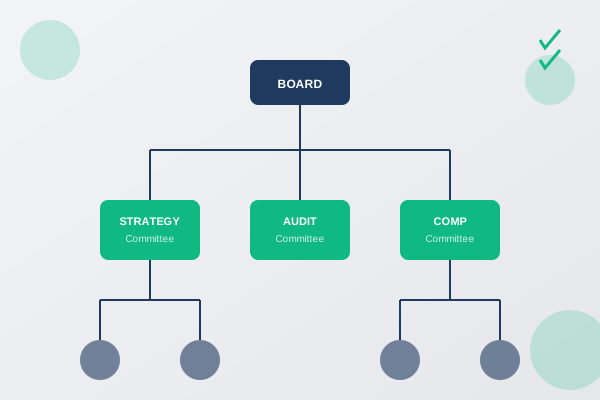
Committees and Delegated Authority
As your board formalizes, consider establishing committees for specific oversight areas:
- Compensation Committee: Oversees executive compensation, equity grants, and hiring packages for senior roles
- Audit Committee: Manages relationship with auditors and reviews financial controls (often required as you approach Series C)
- Nominating/Governance Committee: Handles board composition, director recruitment, and governance policies
Not every Series B company needs all these committees, but having clear processes for compensation decisions and financial oversight reduces friction and protects against future disputes.
Decision Rights and Reserved Matters
Clarify which decisions require board approval versus management authority. Typical "reserved matters" requiring board approval include:
- Annual budget and significant deviations
- Equity issuances and financing transactions
- Major contracts above defined thresholds
- Acquisitions, investments, or divestitures
- Executive hiring and termination
- Changes to equity compensation plans
Document these clearly in your board charter or shareholders' agreement. Ambiguity about decision rights creates friction when stakes are high.
Common Governance Mistakes
Having advised numerous companies through this transition—including a Series B fintech scaling across the GCC—we see several recurring mistakes:
- Treating governance as overhead: View it as protection and structure, not bureaucracy
- Inadequate documentation: Meeting minutes, written consents, and decision records matter
- Ignoring conflicts of interest: Establish clear policies for related-party transactions
- Delaying D&O insurance: Directors and Officers insurance should be in place before Series B closes
- Underutilizing the board: Your directors are resources—engage them between meetings
Building for the Future
The governance foundations you establish at Series B will evolve but shouldn't require wholesale replacement. Design structures that can scale: processes that accommodate additional complexity, documentation practices that satisfy future due diligence, and board dynamics that remain functional as stakes increase. This is where growth-stage advisory can make a meaningful difference, helping founders build frameworks that serve them through subsequent rounds and beyond.
Remember that governance serves the business. The goal isn't bureaucratic perfection—it's creating structures that enable better decisions, protect stakeholders, and position your company for continued success.
Need Governance Support?
Blue Ridge Advisory helps growth-stage companies establish governance frameworks that scale. Let's discuss your specific situation.
Schedule a Consultation